A revelatory examination of the alchemy of successful selling and its essential role in just about every aspect of human experience.
When Philip Delves Broughton went to Harvard Business School he was baffled to find that sales was not on the curriculum.
When Philip Delves Broughton went to Harvard Business School he was baffled to find that sales was not on the curriculum.
Why not, he wondered? Sales plays a part in everything we do—not just in clinching a deal but in convincing people of an argument, getting a job, attracting a mate, or getting a child to eat his broccoli.
He assembled his own master class in the art of selling by setting out on a remarkable pilgrimage to find the world’s great wizards of sales.
Great selling is an art that demands creativity, mindfulness, selflessness, and resilience; but anyone who says you can become a great salesperson in 15 minutes is either a charlatan or a fool.
Great selling is an art that demands creativity, mindfulness, selflessness, and resilience; but anyone who says you can become a great salesperson in 15 minutes is either a charlatan or a fool.
The more Delves Broughton traveled and listened, the more he found a wealth of applicable insight.
In Morocco, he found the master rug merchant who thrives in Kasbah by using age-old principles to read his customers. In Tampa, he met with Tony Sullivan, king of the infomercial, and learned the importance of creating a good narrative to selling effectively. In a sold-out seminar with sales guru Jeffrey Gitomer, he uncovered the ways successful selling approaches religion, inspiring faith and even a sense of duty in customers. From celebrity art dealer Larry Gagosian to the most successful saleswoman in Japan, Broughton tracked down anyone who would help him understand what it took to achieve greatness in sales.
Though sales is the engine of commerce and industry—more Americans work in sales than in manufacturing, marketing, or finance—it remains shrouded in myth.
Though sales is the engine of commerce and industry—more Americans work in sales than in manufacturing, marketing, or finance—it remains shrouded in myth.
The Art of the Sale is a powerful beam of light onto the field, a wise and winning tour of the best in show of this endeavor which is nothing less than the means by which all of us, one way or another, get our way in the world.
Check Out Related Media
|
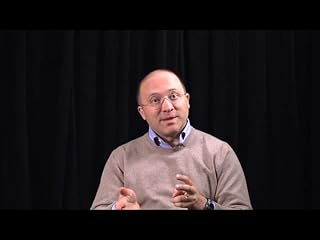

An interview with Philip Delves Broughton about The Art of the Sale
What inspired you to write the book?
At a personal level, I wanted to learn more about selling because I’ve always found it so difficult myself. I considered it a necessary evil and wanted to discover a more positive way to think about it.
The challenges in selling never seemed to me the techniques or the process, but rather the deeper psychological and personal challenges: resilience, optimism, the balance between service to the client and profit for oneself.
None of this was addressed during my MBA program, and sales is absent from most MBA curriculums, which is an extraordinary omission.
Then finally, I’m fascinated by the most human aspects of business, those moments when two people look each other in the eye and decided whether or not to trust each other, whether to buy or sell.
Sales, as one great salesman told me, is the greatest laboratory there is for studying human nature.
After writing this book, I agree.
What role does sales play in our culture?
It’s everywhere, not just in commerce. We sell ourselves to each other for jobs and friendships. We sell our children on the importance of going to school.
We are all selling all the time, so it’s important we get comfortable with selling well.
This does not mean that capitalism has permeated ever aspect of our culture--that’s a whole other discussion--but rather that the back and forth inherent in selling, the importance of self knowledge and the ability to persuade are vital to realizing our purpose, whatever that might be.
People have been bombarded with books and information on how to succeed or get ahead at their job--what is different about The Art of the Sale? I hope this book helps whoever reads it to sell better, but it’s not a self-help book. It’s an examination of selling, the personalities who succeed at it and the psychological challenges it presents.
I hope it helps people reflect on who they are and how they can make the very best of their talents through selling. But this is a very personal process.
I hope that somewhere amidst the range of characters, stories and reflections in my book, each reader will find a few that deeply resonate with them.
You describe your book as the “Dale Carnegie for the 21st Century”--can you elaborate?
Dale Carnegie wrote about the habits and practices required to make friends and influence people. What he proposes is pure common sense. Why he’s still read is because, as the CEO of the Dale Carnegie company told me, “common sense isn’t common practice.”
I think a lot of the secrets to selling are in fact common sense, but they get buried by our enthusiasm for quasi-scientific techniques and answers.
I hope that my book returns selling to a more intimate, personal level, which is where the hardest sales challenges must be solved.
If you can wrestle the basics into place and develop the right mindset to sell, then it will spill over into the rest of your life with enormously positive consequences.
Were there some universal qualities you found in great sales people?
Resilience, persistence and optimism are the fundamental traits of good salespeople.
They have high degrees of emotional intelligence and empathy, but also sufficient ego to deal with endless rejection and to push through a sale against the odds.
They are great readers of people and tend to be highly creative in achieving their goals.
Many are wonderful story-tellers.
They really like people.
I’ve yet to meet a great salesperson who wasn’t great company.
These traits and qualities can come in all kinds of packages.
Is President Obama a good salesman? Is a good salesman what we need in the White House over the next 4 years?
Obama’s a brilliant salesman - as you must be to be elected President.
Convincing the American people to put you in the White House is one of the greatest sales challenges.
His particular gift is in making the great speech when it counts.
He’s not an effortless glad-hander the way Bill Clinton was. But cometh the moment, cometh the man.
In 2008, he created an attractive vision and mobilized a terrific campaign organization behind his ideas and personality to win against the odds. That was a great selling feat.
Once in office, selling is one of the President’s main jobs, as it is for any chief executive.
Presidents need to be able to sell their policies to get them implemented.
They also need to exude confidence in difficult times.
No one wants to see a shrinking President.
We crave one who deals ably with the realities of the present while providing a confident view of the future.
So, yes, selling is a vital skill for any President, but particularly when the country needs rallying.
About the Author
Philip Delves Broughton was born in Bangladesh and grew up in England. He served as the New York and Paris bureau chief for The Daily Telegraph of London and led the Telegraph’s coverage of 9/11.
He has twice been nominated for the British Press Awards. His work has also appeared in the Financial Times, The Wall Street Journal, the Times of London, and the Spectator.
He received an MBA from Harvard Business School. Broughton’s New York Times bestseller, Ahead of a Curve, recounts his experience there.
Source:
The Art of the Sale: Learning from the Masters About the Business of Life: Philip Delves Broughton: Amazon.com: Kindle Store


